

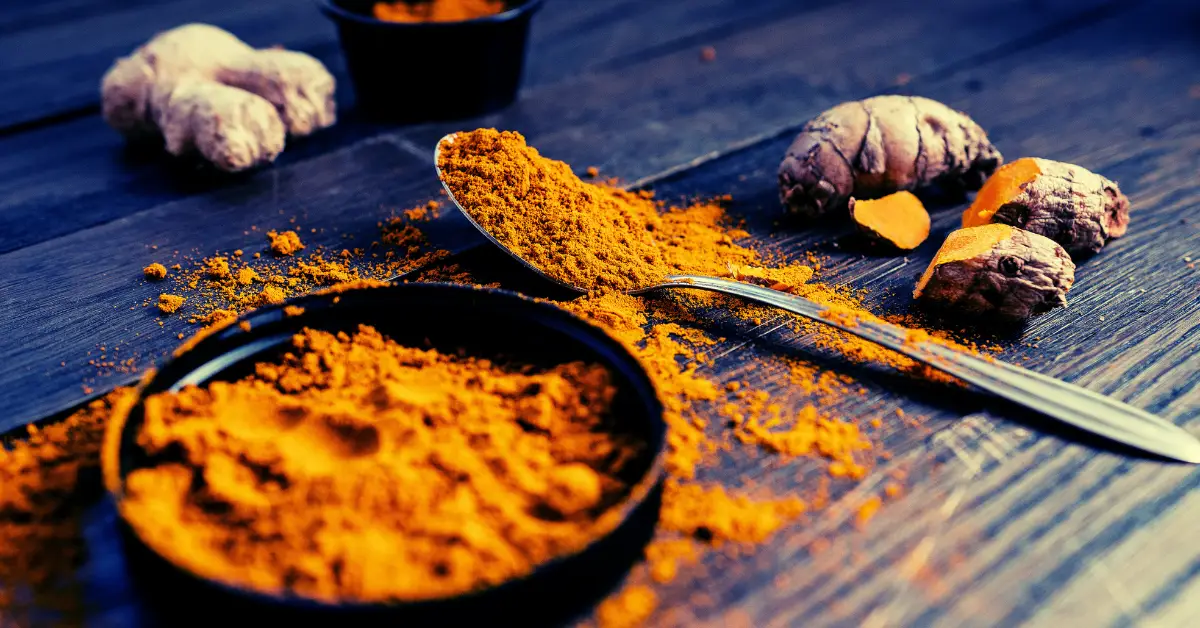
It is believed that because of the many health benefits of Turmeric, it could make it one of the most powerful and effective nutritional substances in existence today. Many scientific studies have been conducted which attribute a plethora of benefits for the body and brain because of the main active ingredient Curcumin. In this feature we are covering 6 golden health benefits of turmeric which covers some of the more life changing health conditions affecting people today.
Turmeric (family of ginger Zingiberaceae) powder or root, is a bright golden yellow spice most commonly found in Asian cuisine, and has gained popularity in recent years for its numerous health benefits. Packed with powerful compounds, such as Curcumin, turmeric offers a wide range of advantages for human health. In this report, we will explore the remarkable benefits of turmeric and learn how it can be used to promote overall well-being.
Health Benefits of Turmeric #1 | Anti-Inflammatory Properties
One of the key health benefits of turmeric is its potent anti-inflammatory properties. Curcumin is the active ingredient in turmeric, has been shown to help reduce inflammation in the body. Chronic inflammation is associated with various diseases, including heart disease, cancer, and also arthritis. Consuming turmeric regularly may aid in managing inflammation and also has the potential in lowering the risk of developing these conditions.[1]
Health Benefits of Turmeric #2 | Powerful Antioxidant
Turmeric possesses strong antioxidant properties that help protect our bodies against damage caused by free radicals. Free radicals are unstable molecules that can cause oxidative stress, leading to cell damage and ageing. By neutralising these harmful molecules, turmeric’s antioxidants contribute to maintaining healthy cells and tissues.[2]
Health Benefits of Turmeric #3 | Enhanced Brain Function
One of the other significant health benefits of turmeric is on cognitive health. Studies suggest that turmeric could have a positive impact on brain health, due to Curcumins ability to cross the blood-brain barrier, which allows it to enter the brain and potentially support cognitive function. Research indicates that turmeric may help improve memory, enhance focus, and even reduce the risk of Neurodegenerative diseases such as Alzheimer’s.[3]
Health Benefits of Turmeric #4 | Potential Anti-Cancer Properties
While more research is needed, turmeric shows promise in its potential to combat cancer. Curcumin’s anti-inflammatory and antioxidant properties may help inhibit the growth and spread of cancer cells. Studies have demonstrated that turmeric extracts can suppress the growth of various types of cancer cells, including breast, colon, lung, and prostate cancer. However, it’s important to note that turmeric should not replace conventional cancer treatments but can be a complementary addition to a healthy lifestyle.[4]
Health Benefits of Turmeric #5 | Digestive Health
Turmeric has been used for centuries to aid digestion and promote a healthy gut. It stimulates the production of bile, which aids in the digestion of fats. Turmeric’s anti-inflammatory properties can also help alleviate symptoms of digestive disorders, such as irritable bowel syndrome (IBS) and inflammatory bowel disease (IBD).[5]
Health Benefits of Turmeric #6 | Antibacterial Properties
Turmeric (Curcumin) has also been associated with antiviral and antibacterial activity. Although more research needs to be conducted, early testing and investigations have shown that it acts against various human pathogens such as the influenza virus, hepatitis C virus, HIV and strains of Staphylococcus, Streptococcus, and Pseudomonas. Despite the potency of Curcumin, it has yet to be approved as a therapeutic antiviral agent. But early signs are showing promise.[6]
How To Use Turmeric
There are several ways to incorporate the health benefits of turmeric into your daily routine:
a) Turmeric Powder: Sprinkle turmeric powder on cooked vegetables, soups, or stews to add flavour and enjoy its health benefits.
b) Golden Milk: Prepare a warm and soothing turmeric-infused beverage by combining turmeric powder with milk (dairy or plant-based), a pinch of black pepper to increase absorption of Curcumin, and a sweetener of your choice (optional).
c) Curcumin Supplements: Curcumin supplements are available in the form of capsules or tablets. It is advisable to consult a healthcare professional before starting any new supplement regimen.
d) Turmeric in Cooking: Turmeric can be used in various recipes, including curries, stir-fries, salad dressings, and marinades, to enhance both flavour and health benefits.
The Downside of Turmeric
Despite curcumins numerous potential health benefits, it does have one major issue. The main problem with ingesting Curcumin by itself is its poor bioavailability [7], which is due mainly to poor absorption into the bloodstream, rapid metabolism, and rapid elimination.
Curcumin absorption can be significantly improved when combined with enhancing agents such as;
- Black Pepper: Taking turmeric together with black pepper, which contains piperine, a known bioavailability enhancer, can increase turmeric absorption by up to 2,000% [8]
- Healthy Fats: Since turmeric is fat-soluble, consuming this spice with a source of healthy fats (such as avocado, olive or coconut oil, eggs, oily fish and even nut butters) can slow down its absorption, allowing more Curcumin to bypass the liver and enter the bloodstream.[9]
- Quercetin: Quercetin, an antioxidant found in berries, onions, and grapes (including red wine), also aids in promoting Curcumin absorption.[10]
- Heat: Gentle heating (less than 15 minutes) can increase the rate of Curcumin absorption and intensify its effects.
Here are some delicious and nutritious ways to incorporate the health benefits of turmeric into your diet:
- Add turmeric, black pepper, and a healthy fat like coconut milk or avocado oil to soups and curries.
- Create a golden latte or tea by heating turmeric with a sprinkle of black pepper.
- Blend turmeric into a smoothie packed with berries for an added boost.
- Infuse plain white rice with a dash of colour and subtle flavour using turmeric.
- Mix turmeric into dips and spreads like hummus or cream cheese.
- Use turmeric to add vibrancy and taste to vegan dishes like tofu scrambles and non-dairy cheese.
- Sprinkle turmeric on popcorn, incorporate it into bread recipes, stir-fries, and roasted vegetables and nuts for extra nutrition and a hint of flavour.
By combining turmeric with the right ingredients and cooking methods, you can maximise its potential health benefits and enjoy its unique flavour in a variety of dishes.
Cautions & Risks
Despite the many associated health benefits of turmeric on human health and wellbeing, it is not without risks to individuals with specific health conditions or those who are taking prescription medications, where interactions with the use of herbs could be an issue. Using a small quantity of turmeric in culinary preparations is generally safe.[11]
Nevertheless, individuals taking turmeric in gel or tablet form as a supplement should be cautious.
Due to the alkaloids in turmeric, there are associated risks for those with conditions, such as gallbladder problems, diabetes, iron deficiency, liver disease, pregnancy, hormone sensitive conditions, heart arrhythmia, or those who are due to have an operation… just to name a few.[11]
In addition, anyone taking prescription medications also needs to exercise a level of caution because of potential interactions with their prescribed drugs. This is why before taking Turmeric or any other kind of medicinal herb, you check with your medical health professional or qualified medical herbalist practitioner.[11]
It is clear that there are many health benefits of turmeric with more research studies being conducted.
Conclusion
Turmeric is a potent spice that has been recognised for its numerous health benefits. Its active compound, curcumin, possesses strong anti-inflammatory and antioxidant properties, that has the potential to improve cognition and brain function. Research suggests that turmeric may aid in reducing inflammation, managing pain, supporting digestive health, and even potentially contributing to the prevention of certain chronic illnesses and diseases. Despite its positive aspects, there are potential risks of interactions to those who are taking prescription medications and those who have specific health conditions that could be problematic because of alkaloids in Turmeric. While more studies are needed to fully understand its effects, it is clear, that because of the health benefits of turmeric, incorporating it into a balanced diet can be a flavourful way to potentially enhance your health and wellbeing.
Scientific Sources
[1] Effects of curcumin on serum cytokine concentrations in subjects with metabolic syndrome: A post-hoc analysis of a randomized controlled trial – https://pubmed.ncbi.nlm.nih.gov/27470399
[2] Curcumin inhibits tumor growth and angiogenesis in ovarian carcinoma by targeting the nuclear factor-kappaB pathway https://pubmed.ncbi.nlm.nih.gov/17545551
[3] The effect of curcumin (turmeric) on Alzheimer’s disease: An overview https://www.ncbi.nlm.nih.gov/pmc/articles/PMC2781139/
[4] Curcumin: A review of anti-cancer properties and therapeutic activity in head and neck squamous cell carcinoma https://www.ncbi.nlm.nih.gov/pmc/articles/PMC3055228/
[5] Interaction between Gut Microbiota and Curcumin: A New Key of Understanding for the Health Effects of Curcumin https://www.ncbi.nlm.nih.gov/pmc/articles/PMC7551052/
[6] Anti-infective Properties of the Golden Spice Curcumin https://www.frontiersin.org/articles/10.3389/fmicb.2019.00912/full
[7] Curcumin: A Review of Its’ Effects on Human Health https://www.ncbi.nlm.nih.gov/pmc/articles/PMC5664031/#B15-foods-06-00092
[8] Influence of piperine on the pharmacokinetics of curcumin in animals and human volunteers https://pubmed.ncbi.nlm.nih.gov/9619120/
[9] Using Black Pepper to Enhance the Anti-Inflammatory effects of Turmeric https://www.umassmed.edu/nutrition/blog/blog-posts/2019/6/using-black-pepper-to-enhance-the-anti-inflammatory-effects-of-turmeric/
[10] Role of Quercetin as an effective Bioenhancer in Curcumin Absorption, In vitro Study https://www.proquest.com/openview/e6e58b0225c439860095254af61fa896/1.pdf?pq-origsite=gscholar&cbl=1096441
[11] Who should not use Turmeric? https://www.medicinenet.com/who_should_not_use_turmeric/article.htm
